Local processing
AI workloads are intended to run on hardware inside your own network.
Private AI, on your network
A proposed local AI server for private workflows, designed to keep sensitive work under your control and inside your network.
Prototype concept. Hardware, software, and pilot terms are still in development.
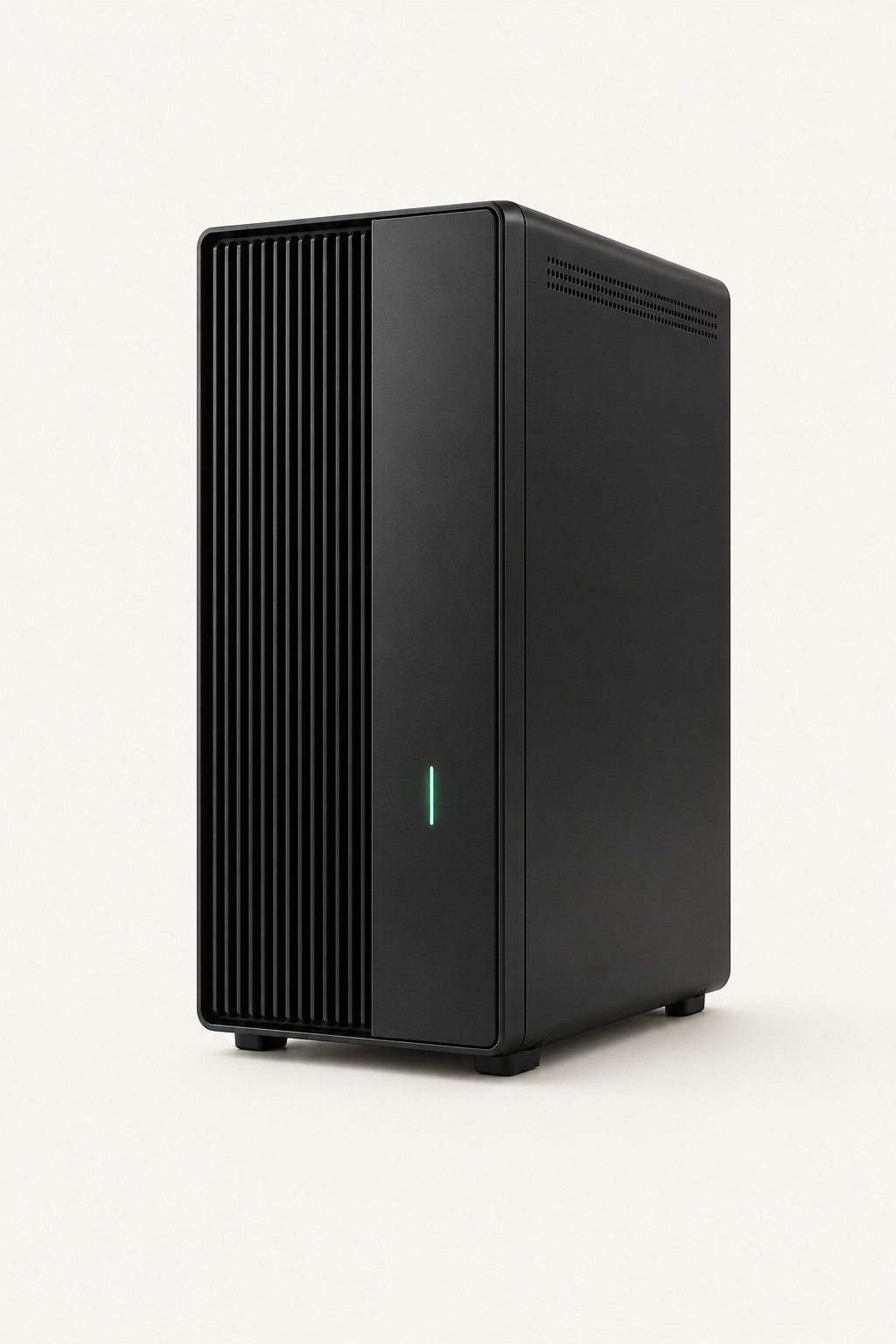
AI workloads are intended to run on hardware inside your own network.
You decide what the system can reach, retain, and operate.
The concept is being shaped for practical, carefully scoped pilot deployments.
01 · The approach
The project starts from a simple premise: an AI system can be genuinely useful without making remote data transfer the default. Local hardware, deliberate permissions, and human review form the foundation.
Proposed network pattern
Authorized devices connect to the local appliance. The appliance works with approved files, models, and tools. External services can remain unavailable unless a specific workflow calls for them.
Exact isolation and connectivity would be set during each installation.
02 · Core capabilities
These are the capabilities the project is being designed around. Final features will depend on prototype validation and each pilot's needs.
Ask questions across approved local files and internal references without making cloud access the default.
Draft documents, summarize material, prepare reports, and help coordinate repeatable office tasks.
Explore spreadsheets and business data in a controlled workspace, with people reviewing the output.
Direct different jobs to the models and tools best suited to them as the platform matures.
Reach the system from authorized devices on the local network through a simple, private interface.
Plan for updates, monitoring, and capability expansion without surrendering control of the installation.
03 · Who it's for
The strongest early fit is likely to be owners and small teams who can name the work they want AI to help with—and the information they want to keep close.
Industry, security, and regulatory requirements would need individual review before any pilot.
Teams that want useful AI for daily operations without defaulting sensitive work to a shared cloud service.
Offices handling private material that need a carefully scoped system and a clear review process.
Consultants, creators, and technical builders who want capable tools they can run and control themselves.
Privacy-conscious home users interested in a personal AI hub, local files, and future device integrations.
04 · Expansion plan
The roadmap is directional, not a launch promise. Each phase depends on technical validation, pilot feedback, and a support model that can be delivered reliably.
Refine the local server prototype, private file workflows, network access, and real-world support requirements.
Work with a small number of homes or businesses to measure usefulness, reliability, setup time, and maintenance needs.
Explore modular hardware, specialized business workflows, richer local data connections, and private device automation.
05 · Interest signal
This is a way to measure serious curiosity before any fundraising exists. The question is conditional: if the company became investable and reached the milestones you care about, what might you consider?
What verified responses could show later
Responses are anonymous, non-binding, and visible only in the private owner dashboard. No public totals or fabricated counters are shown.
Project updates
Occasional updates will cover prototype funding milestones, hardware decisions, build progress, measured results, and opportunities to participate in a pilot.
06 · Contact
If you have a real workflow that should stay local, describe it here. The form prepares an email in your own mail app so you can review it before sending.
Email directlycontact@localaisystemsintegrations.com